The Ultimate Guide to the Know, Feel, Do Framework
Why Every Successful Marketing Strategy Starts with Human Behavior
Marketing has changed dramatically over the past few years.
Search engines have evolved. AI tools like ChatGPT and Google Gemini are changing how people discover information. Social media algorithms prioritize interests over followers. Businesses have more ways than ever to reach potential customers.
But despite all of these technological advances, one thing hasn’t changed:
People still make decisions the same way they always have.
Before someone becomes a customer, donates to your nonprofit, joins your organization, or schedules a meeting, they must first:
- Know who you are and what you do.
- Feel that you’re the right choice.
- Do something.
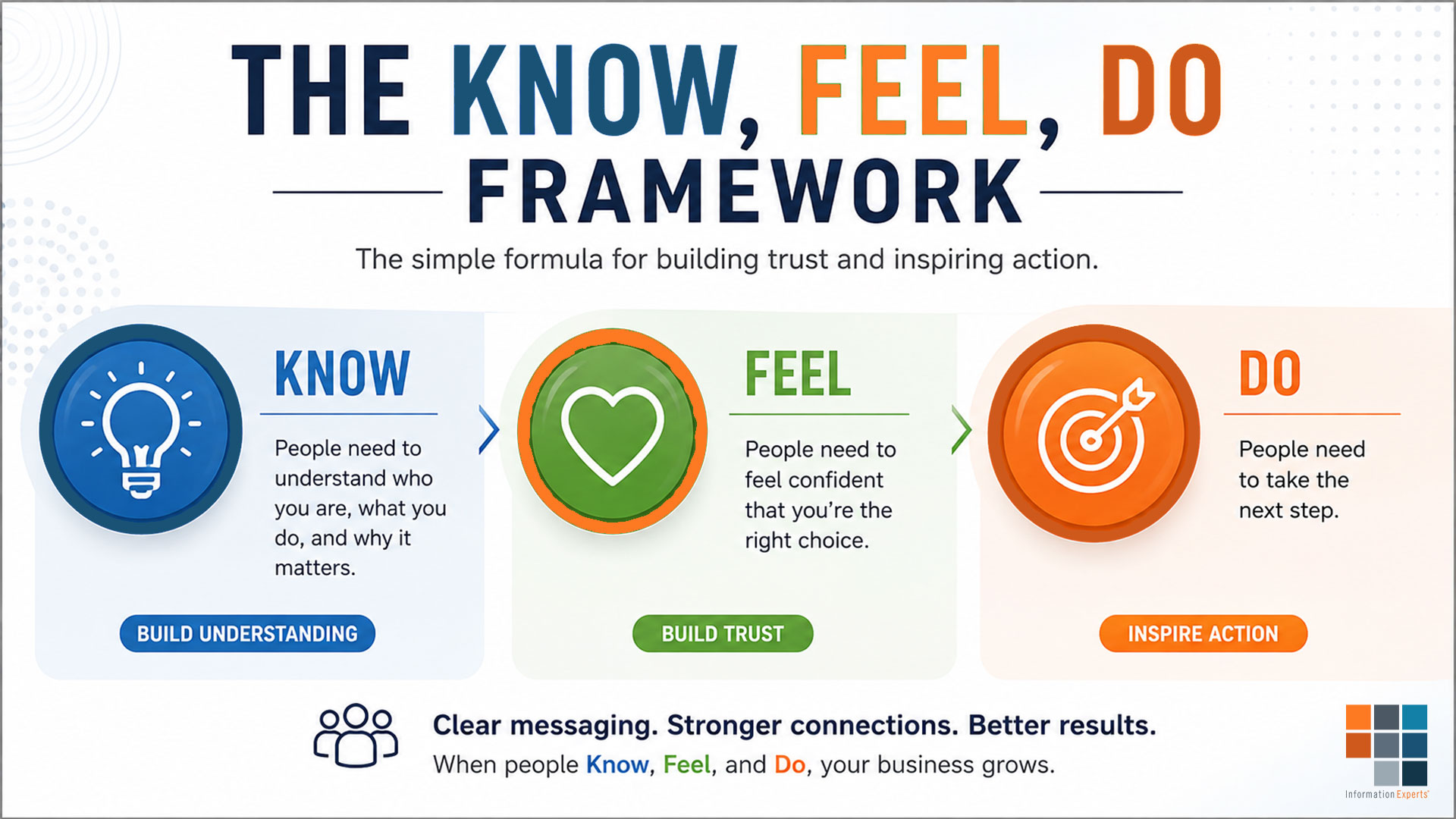
That’s the foundation of the Know, Feel, Do Framework, a simple but powerful model that helps organizations create messaging that influences behavior instead of simply sharing information.
Whether you’re building a website, writing a blog post, creating social media content, producing a video, or preparing a sales presentation, understanding this framework can dramatically improve your marketing effectiveness.
What Is the Know, Feel, Do Framework?
The Know, Feel, Do Framework is a communication model that helps organizations determine what their audience needs before taking action.
Instead of asking, “What do we want to say?” the framework asks three more important questions:
What should people know?
What should people feel?
What should people do?
By answering these questions first, every piece of marketing becomes more intentional, consistent, and effective.
The framework works because it aligns your messaging with how people naturally make decisions.
Why Does the Know, Feel, Do Framework Work?
People rarely make decisions based on facts alone.
Logic helps us understand.
Emotion helps us decide.
Clarity helps us act.
Many organizations focus almost exclusively on sharing information. They explain their services, list their features, and describe their experience.
Unfortunately, information alone rarely changes behavior.
The Know, Feel, Do Framework recognizes that successful communication requires all three elements working together.
Know: Build Understanding
Before people can choose you, they need to understand you.
Your audience should quickly know what you do, who you help, and why you’re different. Clear messaging helps both people and AI understand your expertise.
Good: “We help nonprofits strengthen their digital presence through websites, branding, and automation.”
Poor: “We provide innovative, world-class solutions.”
Feel: Build Trust
Understanding alone isn’t enough. People need confidence before they’ll take action.
Trust is built through testimonials, case studies, reviews, helpful content, and consistent branding. Every interaction should reinforce that you’re credible and capable.
Examples: Client success stories, Google reviews, thought leadership, professional design.
Do: Inspire Action
Once people understand your value and trust your organization, the next step should be obvious.
Every page should encourage one clear action instead of leaving visitors wondering what to do next.
Examples: Schedule a consultation, request a proposal, download a guide, or contact your team.
How to Use the Know, Feel, Do Framework
One of the biggest misconceptions is that Know, Feel, Do only applies to websites.
In reality, it works almost everywhere.
- On Your Website
Your homepage should clearly explain what you do, establish credibility, and guide visitors toward a next step. - In Blog Posts
Teach something valuable, build authority, and invite readers to continue learning or contact you. - In Sales Presentations
Educate prospects, build confidence, and provide a clear recommendation. - On Social Media
Share useful insights, reinforce your brand personality, and encourage meaningful engagement. - In Email Marketing
Answer questions, strengthen relationships, and provide one simple action.
Common Know, Feel, Do Mistakes
Many organizations accidentally skip one or more stages.
Mistake #1: Asking for Action Too Soon
A visitor lands on your website and immediately sees:
“Schedule a Demo.”
Why?
They don’t even know what you do yet.
People need context before commitment.
Mistake #2: Providing Information Without Emotion
Some websites answer every question perfectly.
They’re also incredibly forgettable.
People remember how you made them feel far longer than they remember your feature list.
Mistake #3: Forgetting the Call to Action
You’ve explained everything perfectly.
Now what?
Never assume visitors know the next step.
Tell them.
Frequently Asked Questions
Why It Matters More Than Ever
As artificial intelligence becomes part of everyday search, many businesses are understandably focused on algorithms, optimization, and automation. Those things matter, but they’re not what ultimately influences decisions. People still choose organizations they understand, trust organizations they believe in, and take action when the next step is clear. Technology may change how people discover your business, but it doesn’t change why they choose you. That’s why the Know, Feel, Do Framework remains just as relevant today as when we first introduced it.
Continue Learning
If you’d like to explore the thinking behind this framework and how it influences human behavior, we also recommend reading our original article:
» Understanding and Influencing Human Behavior: The Power of the Know, Feel, Do Framework
Together, these two articles provide both the strategic foundation and the practical guidance for creating marketing that connects with people and drives action.
The Bottom Line
The best marketing doesn’t start with a website.
It doesn’t start with social media.
It doesn’t even start with AI.
It starts with understanding people.
When your audience knows who you are, feels confident in your organization, and understands exactly what to do next, better outcomes naturally follow.
That’s the power of the Know, Feel, Do Framework.
Ready to Create Marketing That Drives Action?
Information Experts helps organizations create clear messaging, stronger websites, and marketing that people understand, trust, and act on.
Contact us today to start the conversation.